
Applying a heel offloading device such as a heel boot is an important step in pressure injury prevention. But wearing a heel boot does not automatically mean the heel is completely free from pressure. So how can healthcare professionals ensure that the heel is not only offloaded initially, but remains protected over time? Correct positioning, proper fit and regular reassessment are essential to achieving and maintaining effective heel suspension.
The challenge: wearing a heel boot does not guarantee heel offloading
Heel pressure injuries are a common concern in healthcare, particularly for patients with limited mobility or those who spend long periods in bed. The heel is especially vulnerable because there is very little soft tissue between the skin and the heel bone.
Effective heel offloading plays an essential role in reducing the risk of heel injuries by removing direct pressure from this vulnerable area. However, simply applying a heel boot does not guarantee that the heel is completely offloaded.
The effectiveness of a heel protector depends on several factors, including the patient’s positioning, the fit of the device and whether it remains correctly positioned during use. Even when a device is initially applied correctly, changes in the patient’s position or movement may affect the intended offloading.
The solution: Achieving and maintaining true heel offloading
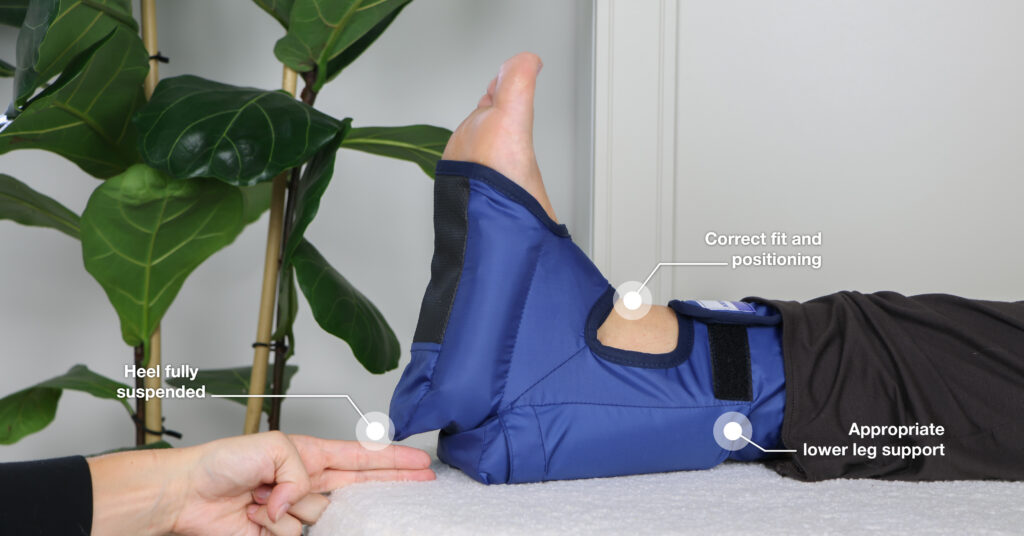
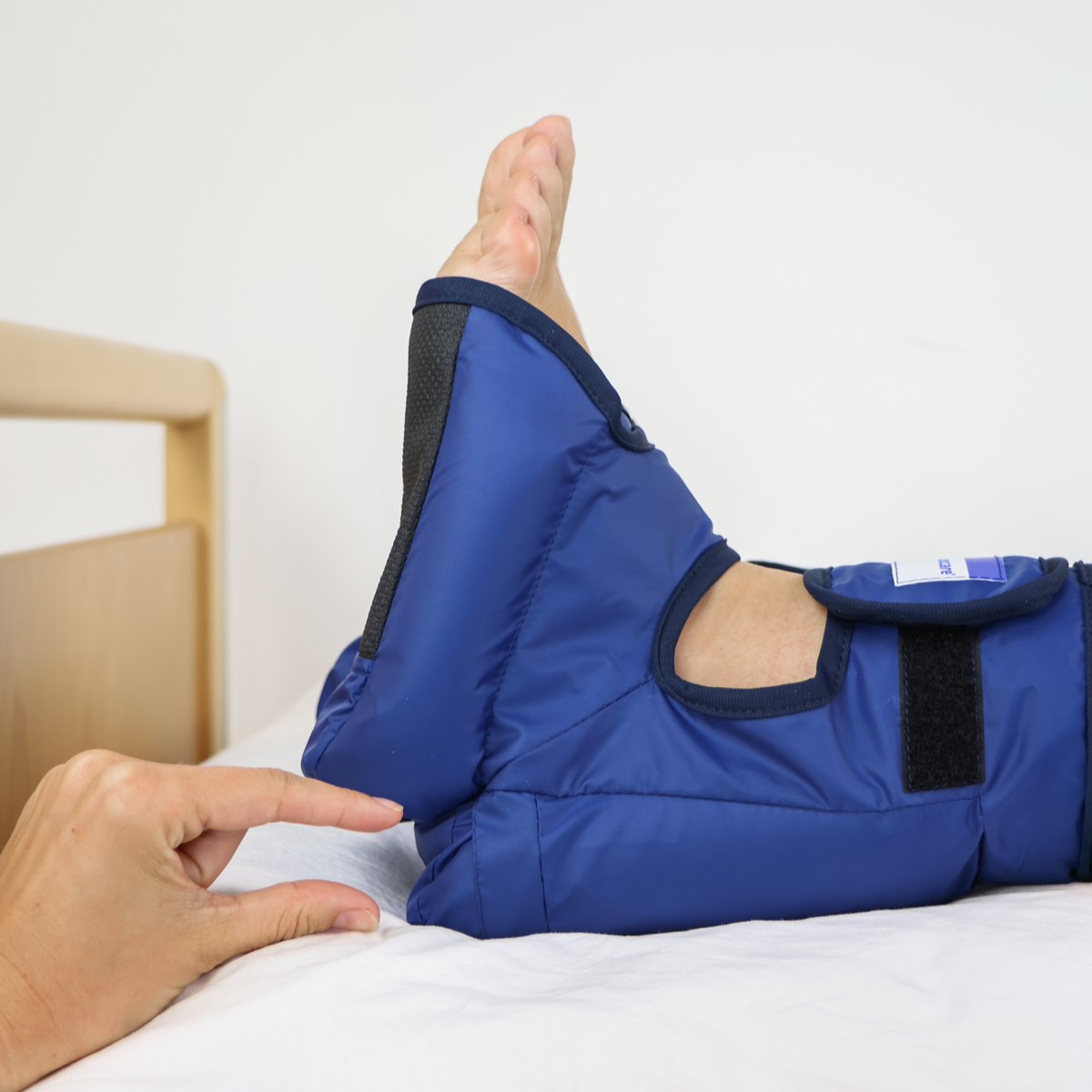
Effective heel pressure injury prevention requires more than reducing pressure. Complete heel offloading means that the heel is fully suspended and does not touch the bed or another supporting surface. The aim is to maintain this suspension over time, with regular checks to confirm that positioning and fit remain appropriate.
To achieve this, correct application, proper positioning and regular checks are essential.
Healthcare professionals should focus on three simple steps: Look. Check. Inspect.
- Look: Is the heel completely suspended and free from contact with the supporting surface?
- Check: Is the lower leg properly supported, and is the heel boot correctly fitted and positioned?
- Inspect: Has the device shifted, and are there any signs of unwanted pressure or changes in the skin?
These checks should not stop after the heel boot has been applied. The International Guidelines recommend checking pressure points during repositioning to confirm adequate offloading, alongside regular heel assessment.
The effectiveness of a heel offloading device depends not only on how well it is initially applied, but also on whether the heel remains offloaded between checks.
Product example: the design of the Maxxcare Heel Pro Evolution
The Maxxcare Heel Pro Evolution is designed to address this challenge by supporting complete heel offloading with stable positioning and patient comfort.
Its innovative air-filled SmartTube technology lifts the heel away from the bed, redistributing pressure towards the calf and lower leg. This helps keep direct pressure off the heel when the device is correctly fitted and positioned.
The anatomically contoured design helps keep the foot and lower leg in a stable position, reducing unwanted movement and the risk of the device shifting during use.
At the same time, its lightweight, soft and breathable materials help keep patients comfortable during prolonged use.
Together, these features are designed to help maintain consistent heel suspension between clinical checks, helping to reduce the need for frequent adjustments. However, regular checks remain essential to ensure that the heel continues to be fully offloaded.
Learn more about true heel offloading
What is the difference between reducing heel pressure and achieving complete heel suspension? And how can the right device help maintain effective offloading between clinical checks?
For further information on stable positioning and patient comfort in heel offloading, read the clinical information sheet “True Offloading. Consistently Maintained.”
True offloading. Consistently maintained.
Effective heel protection is not simply about wearing a heel boot. It is about ensuring that the heel remains completely offloaded over time.
By combining complete heel suspension, stable positioning and patient comfort, the Maxxcare Heel Pro Evolution is designed to help healthcare professionals provide consistent heel protection in daily care.
Because the goal is simple: Supports complete heel offloading. Improved comfort. Better outcomes.
Discover how the Maxxcare Heel Pro Evolution helps healthcare professionals achieve and maintain effective heel offloading. Click here to find our clinical documents.

Focus on heel pressure injury awareness as a standard of care, not just a complication
Introducing Maxxcare, both a product and your partner in prevention.

- © 2026 Maxxcare
- Disclaimer
- Privacy and cookies